

Choosing the right age for a child's early education is an important decision for every parent. The preschool years are a special stage of development when children begin exploring the world, learning new skills, developing communication abilities, and building relationships. Parents often wonder when their children should begin structured learning and whether online preschool programs are suitable for younger learners. Understanding the right starting age can help families make an informed decision that supports their child's educational and emotional development.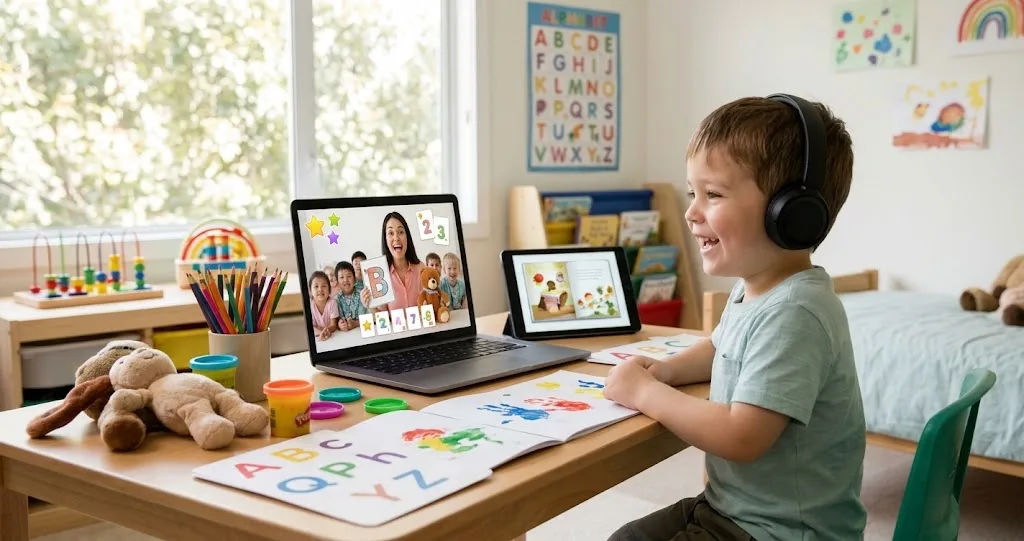
Early childhood education does not follow the same timeline for every child. Some children show an interest in letters, numbers, stories, and creative activities at an early age, while others need more time to develop confidence and independence. Pre School Online programs provide flexible learning opportunities that can introduce young children to basic educational concepts through interactive lessons, games, storytelling, music, and guided activities. However, selecting the right starting age requires considering a child's readiness, attention span, communication skills, and individual learning needs.
Generally, children between the ages of three and five are considered suitable for preschool education. Online learning can sometimes begin earlier through simple parent-guided activities, but formal preschool-style lessons should match the child's developmental stage. The goal is not to rush academic achievement. Instead, it is to create positive learning experiences that prepare children for future educational environments.
The Best Age to Start Online Preschool
The best age to begin online preschool depends on several developmental factors. Although many educational programs accept children from approximately three years old, parents should look beyond age when making their decision.
Children develop at different speeds. One child may enjoy sitting through a short educational activity, while another may prefer exploring toys, drawing, or playing independently. Both experiences can support learning.
Online preschool should introduce children to education gradually. It should encourage curiosity, creativity, communication, and problem-solving rather than placing unnecessary pressure on young learners.
Starting at Age Two
Some children begin exploring educational activities around their second birthday. At this stage, learning should remain informal, playful, and supported by parents or caregivers.
Two-year-olds are developing basic language, motor coordination, and social awareness. They enjoy recognizing familiar objects, listening to songs, looking at colorful pictures, and repeating simple words.
Parents can introduce short digital activities, such as:
-
Watching age-appropriate educational stories together.
-
Listening to alphabet and number songs.
-
Identifying colors, shapes, and familiar objects.
-
Participating in simple drawing activities.
-
Practicing basic vocabulary through pictures.
These activities can introduce early learning concepts without requiring children to follow a formal online classroom schedule.
At this age, screen time should be limited and balanced with physical play, conversation, outdoor activities, and hands-on exploration.
Starting at Age Three
Three years old is a common starting point for structured preschool learning. Many children at this age begin showing greater curiosity about letters, numbers, animals, colors, and everyday objects.
They may also become more comfortable following simple instructions and participating in short activities.
A well-designed Pre School Online program can introduce three-year-olds to foundational concepts through songs, storytelling, interactive games, and creative exercises.
Lessons should be short and engaging. Children at this age generally benefit from activities that allow them to move, speak, point, draw, and respond rather than simply watching a screen.
The purpose is to build familiarity with learning routines while keeping education enjoyable.
Starting at Age Four
Four years old is another excellent age to begin online preschool. Many children have developed stronger communication skills, improved coordination, and a greater ability to participate in structured activities.
At this stage, children may be ready to explore more detailed learning experiences, including:
-
Recognizing letters and beginning sounds.
-
Counting objects and understanding simple numbers.
-
Identifying basic shapes and patterns.
-
Listening to longer stories.
-
Practicing early writing movements.
-
Following two-step instructions.
-
Participating in simple problem-solving games.
Online preschool lessons can support these skills through guided exercises and interactive activities.
Four-year-olds may also become more comfortable communicating with teachers and participating in small virtual groups. However, individual readiness should still guide the learning experience.
Starting at Age Five
Five-year-olds are often approaching the transition into kindergarten or formal primary education. They may be ready for more organized learning routines and activities that develop school readiness.
At this age, children can often concentrate for longer periods, understand more complex instructions, and participate in activities that involve several steps.
A preschool program can help strengthen early literacy, numeracy, communication, and independent learning habits.
Children may practice recognizing familiar words, counting larger groups of objects, identifying beginning sounds, and completing simple creative projects.
For children who have not previously attended preschool, online learning can provide a gentle introduction to classroom routines before entering a traditional school environment.
Important Signs That Your Child Is Ready for Online Preschool
Age is an important consideration, but developmental readiness is equally valuable. Parents should observe how their children behave during everyday activities before choosing a program.
Interest in Learning Activities
A child who regularly asks questions, enjoys picture books, identifies objects, or shows curiosity about new experiences may be ready for introductory educational activities.
Interest is a positive sign because children generally learn more effectively when they are naturally curious.
Parents should avoid forcing lessons. Instead, they can introduce activities that connect with the child's existing interests.
Ability to Follow Simple Instructions
Preschool activities often involve basic directions, such as finding a red object, identifying a particular shape, or choosing the correct picture.
A child who can understand and respond to simple instructions may find structured online activities easier to follow.
This ability does not need to be perfect. Preschool is also an opportunity to develop listening and comprehension skills.
Developing Communication Skills
Children benefit from being able to express basic needs, answer simple questions, and communicate their thoughts.
They do not need advanced language abilities before beginning preschool. However, some communication skills can make virtual activities more comfortable.
Interactive lessons should encourage children to speak, describe pictures, repeat words, and ask questions.
Increasing Independence
Another useful sign is a growing ability to complete simple tasks with limited assistance.
For example, a child may be able to select a picture, hold a crayon, organize toys, or participate in an activity after receiving instructions.
Online preschool should support independence gradually while allowing parents to provide assistance when necessary.
Benefits of Starting Preschool Online at the Right Age
Beginning preschool when a child is developmentally ready can create several educational and personal benefits.
Building Early Academic Skills
Preschool introduces children to the foundations of reading, writing, mathematics, and general knowledge.
Children begin recognizing letters, understanding numbers, identifying shapes, and learning basic vocabulary.
These early experiences can make future classroom learning more familiar.
A quality Pre School Online program introduces academic concepts through playful activities rather than expecting young children to memorize large amounts of information.
Developing Communication Abilities
Communication is one of the most important skills developed during early childhood.
Storytelling, songs, discussions, and interactive exercises encourage children to listen carefully and express their ideas.
Online learning can provide opportunities to practice speaking with teachers and other children, particularly when programs include supervised group activities.
Encouraging Creativity
Young children naturally enjoy drawing, painting, building, storytelling, and imaginative play.
Preschool programs can use these interests to encourage creative thinking.
Activities such as completing patterns, creating simple pictures, and inventing stories allow children to explore ideas in different ways.
Creativity also supports problem-solving because children learn to experiment and discover different solutions.
Developing Confidence
Children often become more confident when they successfully complete small learning activities.
Recognizing a letter, counting objects correctly, or answering a question can give them a sense of achievement.
Positive encouragement helps children develop a healthy attitude toward education.
Parents should celebrate effort and improvement instead of focusing only on correct answers.
Creating Flexible Learning Opportunities
One advantage of online preschool is the flexibility it can provide to families.
Parents may be able to arrange activities around household responsibilities, family schedules, and the child's daily routine.
A flexible learning environment can be particularly helpful when families cannot easily access traditional preschool facilities.
However, flexibility should not mean spending excessive time in front of a screen. Learning should include physical movement and offline activities.
What Should Children Learn at Different Preschool Ages?
Educational activities should become gradually more challenging as children grow.
Learning Goals for Two-Year-Olds
At two, the emphasis should be on exploration and basic development.
Suitable activities include:
-
Recognizing familiar objects.
-
Identifying basic colors.
-
Listening to short stories.
-
Learning simple songs.
-
Practicing everyday vocabulary.
-
Exploring shapes through toys.
Parents should participate actively and keep digital activities brief.
Learning Goals for Three-Year-Olds
Three-year-olds can begin exploring more organized preschool concepts.
Their activities may include recognizing letters, counting small groups, identifying animals, sorting objects, and describing pictures.
Simple puzzles and matching games can also improve memory and problem-solving abilities.
Learning Goals for Four-Year-Olds
Four-year-olds can gradually develop early literacy and mathematics skills.
They may practice recognizing more letters, counting higher numbers, identifying patterns, understanding basic comparisons, and improving pencil control.
Story discussions can encourage them to describe events and explain what they understand.
Learning Goals for Five-Year-Olds
Five-year-olds can begin preparing for the expectations of kindergarten.
Their activities may include recognizing familiar words, understanding simple instructions, counting confidently, practicing early writing, and completing guided projects.
Social development should remain an important part of their education.
How Much Time Should Young Children Spend on Online Preschool?
The amount of online learning should depend on a child's age, attention span, and overall daily routine.
Younger children generally need shorter activities with frequent breaks. Longer sessions can become tiring and reduce their interest in learning.
Parents should consider the following general approach:
| Age | Suggested approach |
|---|---|
| 2 years | Brief, parent-guided educational activities |
| 3 years | Short lessons of approximately 5–10 minutes |
| 4 years | Activities of approximately 10–15 minutes |
| 5 years | Activities of approximately 15–20 minutes |
These are flexible activity suggestions, not strict medical screen-time limits. Total screen exposure should also account for entertainment and other digital activities.
Parents should follow current pediatric screen-time recommendations and prioritize active play, sleep, physical movement, and face-to-face interaction.
A good Pre School Online schedule should combine digital lessons with offline exercises. For example, after learning about colors on a screen, children can identify those colors in household objects.
This approach makes learning more practical and meaningful.
How Parents Can Choose the Right Online Preschool Program
Selecting an appropriate educational program is just as important as choosing the starting age.
Not every online preschool offers the same teaching methods, learning materials, or level of parental involvement.
Check the Age Requirements
Start by reviewing the program's recommended age range.
Some platforms are designed for toddlers, while others focus on children preparing for kindergarten.
Choose a program that matches your child's current developmental abilities rather than selecting one simply because it offers advanced lessons.
Review the Curriculum
A suitable preschool curriculum should cover several areas of development.
These may include early literacy, basic mathematics, language development, creativity, social awareness, and problem-solving.
A balanced curriculum should not focus exclusively on reading and counting.
Physical coordination, emotional development, and imaginative activities are also important.
Look for Qualified Educators
Teachers should understand early childhood development and know how to communicate with young learners.
Teaching preschool children requires patience, encouragement, and the ability to explain ideas through simple examples.
Parents should review the educator's qualifications and the program's teaching approach.
Consider Interactive Features
Children generally benefit from active participation.
Look for programs that include storytelling, songs, matching activities, drawing exercises, and opportunities to respond to questions.
A program that relies entirely on prerecorded videos may offer fewer opportunities for interaction.
Evaluate Parental Support
Young children often need help accessing lessons, understanding instructions, and completing activities.
A good program should provide clear guidance for parents.
It should also communicate learning goals and explain how families can reinforce classroom activities at home.
Common Mistakes Parents Should Avoid
Although online preschool can provide useful educational opportunities, certain mistakes can reduce its effectiveness.
Starting Too Early Without Considering Readiness
Some parents believe that earlier enrollment automatically leads to better academic results.
However, young children need time to develop communication, emotional regulation, motor skills, and attention.
Introducing formal lessons before a child is ready may create unnecessary frustration.
Expecting Immediate Academic Results
Preschool is about building foundations, not achieving advanced academic performance.
Children may need repeated exposure before recognizing letters or understanding basic mathematical concepts.
Parents should focus on gradual improvement rather than expecting immediate results.
Allowing Excessive Screen Time
Online learning should not replace outdoor play, physical activities, family conversations, or hands-on experiences.
Children need opportunities to explore their surroundings using all their senses.
A healthy routine balances digital education with real-world activities.
Ignoring Social Development
Children learn important social skills through interaction.
Sharing, taking turns, listening, cooperating, and understanding emotions are essential parts of preschool education.
Parents should encourage playdates, family activities, and group experiences alongside digital lessons.
Comparing Children With Others
Every child develops differently.
One child may recognize letters early, while another may demonstrate stronger creative or communication abilities.
Comparisons can create unnecessary pressure and reduce confidence.
Parents should evaluate progress according to their child's individual development.
Can Online Preschool Prepare Children for Traditional School?
Yes, a suitable online preschool program can help children become familiar with several skills needed in traditional educational settings.
Children can practice listening to instructions, recognizing basic learning materials, answering questions, completing activities, and following simple routines.
They may also develop early literacy and numeracy skills that support kindergarten readiness.
However, online learning cannot fully replace the social and physical experiences provided by an in-person classroom.
Traditional schools offer opportunities to interact with classmates, participate in group games, share resources, and develop independence in a different environment.
A balanced approach can be helpful. Families may combine online preschool activities with community playgroups, outdoor experiences, library visits, and other social opportunities.
The most effective preparation considers academic, emotional, physical, and social development together.
Creating a Positive Online Preschool Routine at Home
A comfortable home learning environment can make educational activities more enjoyable.
Parents do not need an elaborate classroom or expensive equipment. A quiet, organized space with basic learning materials is often enough.
Create a Consistent Schedule
Children benefit from predictable routines.
Choose a convenient time when your child is generally comfortable, rested, and ready to participate.
Short sessions at consistent times can help children become familiar with learning habits.
Prepare Learning Materials
Keep crayons, paper, picture books, building blocks, puzzles, and counting objects nearby.
These materials allow children to continue exploring concepts after their digital lessons finish.
Participate in Activities
Parents should remain involved, particularly when children are young.
Ask questions, encourage responses, and help children connect lesson topics with everyday experiences.
Your involvement can make learning more engaging and meaningful.
Celebrate Small Achievements
Positive feedback can encourage children to continue learning.
Praise their curiosity, creativity, effort, and willingness to try new activities.
Avoid making every activity feel like a test.
Observe Your Child's Progress
Pay attention to changes in communication, attention, confidence, and problem-solving.
If your child regularly becomes frustrated or loses interest, consider adjusting the activity length or difficulty.
A suitable program should support development without creating unnecessary stress.
Conclusion
The best age to start online preschool is not determined by a birthday alone. Although three to five years is a common age range for structured preschool education, some children can benefit from simple parent-guided learning activities earlier. The right decision depends on individual readiness, communication abilities, attention span, curiosity, and emotional development.
At two years old, children generally benefit from playful exploration, songs, pictures, and simple activities. At three, they may become ready for short, structured lessons that introduce basic educational concepts. Four-year-olds can explore more detailed literacy, mathematics, and creative activities, while five-year-olds can begin developing skills that prepare them for kindergarten.
Choosing a suitable Pre School Online program requires careful consideration of its curriculum, teaching methods, educator qualifications, interactive features, and parental support. Families should also make sure that online activities remain balanced with physical play, social interaction, reading, and hands-on experiences.
Most importantly, preschool should help children develop a positive relationship with learning. Parents should avoid rushing academic milestones or comparing their child's progress with others. Instead, they should provide encouragement, maintain realistic expectations, and create opportunities for exploration.
When introduced at the right developmental stage, Pre School Online education can become a valuable part of early childhood learning. A balanced program, supportive family environment, and child-centered approach can help young learners build confidence, develop essential skills, and approach their next educational stage with greater readiness.