

A white label LMS can support SCORM courses, but the exact level of SCORM compatibility depends on the platform and its technical features. SCORM, or Sharable Content Object Reference Model, is one of the most widely used standards for creating and delivering online training content. It allows learning content created with one authoring tool to communicate with a learning management system.
For businesses, schools, training companies, and organizations, SCORM compatibility can make it easier to upload existing courses, track learner progress, record assessment results, and manage training from one central platform. However, not every LMS supports every version of SCORM, so it is important to check compatibility before choosing a platform.
Understanding how SCORM works and what to look for in an LMS can help organizations avoid technical problems and make better use of their existing training materials.
What Is SCORM?
SCORM stands for Sharable Content Object Reference Model. It is a set of technical standards designed to help online learning content communicate with an LMS.
SCORM was developed to improve compatibility between e-learning content and learning management systems. Before standards like SCORM became common, course creators could face problems when moving content from one platform to another.
SCORM provides a common way for course content and an LMS to exchange information. For example, a SCORM course can send information about whether a learner completed a lesson, what score they achieved, and how much time they spent on the course.
Common SCORM Versions
Several versions of SCORM have been used over the years. The most common include SCORM 1.2 and SCORM 2004.
SCORM 1.2 is still widely supported because of its simplicity and long history in the e-learning industry. SCORM 2004 introduced additional capabilities, including sequencing and navigation features.
There are also different editions of SCORM 2004, so organizations should check exactly which version their existing courses use.
How SCORM Courses Work
A SCORM course usually consists of packaged files that contain the learning content and information needed for communication with an LMS.
When an administrator uploads the SCORM package, the LMS reads the package and launches the course for learners.
During the course, the LMS can receive information from the content. Depending on the course and LMS capabilities, this information may include completion status, assessment scores, learner progress, and time spent.
Can a White Label LMS Support SCORM?
Yes, a white label LMS can support SCORM courses if SCORM functionality is included in the platform.
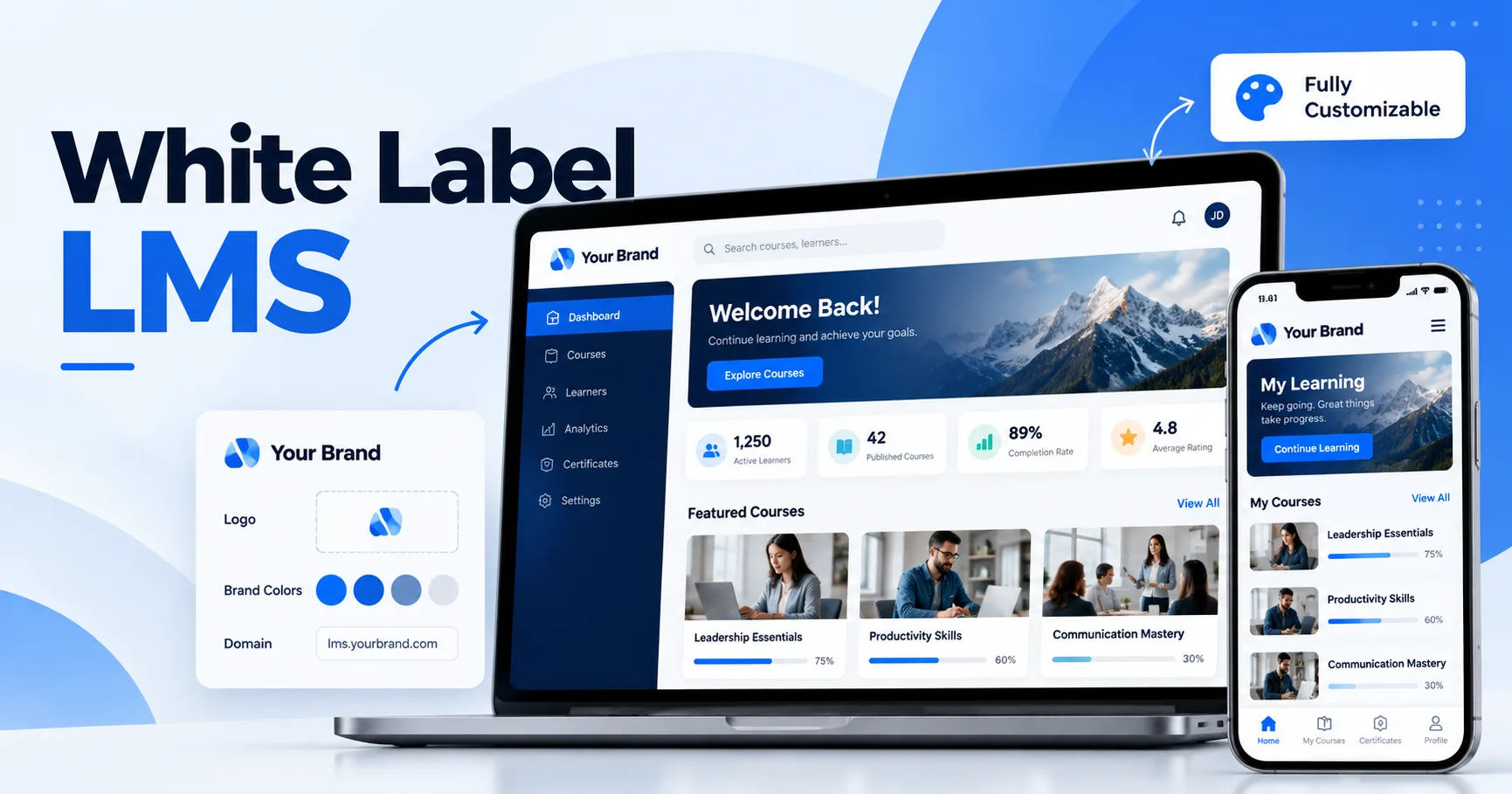
A white-label platform is generally designed to allow an organization to present an LMS under its own brand. This may include a custom logo, colors, domain, user interface, and other branding elements.
White labeling and SCORM support are separate technical features. A platform can offer extensive branding options without necessarily supporting SCORM.
Therefore, businesses should never assume that a white-label platform automatically supports SCORM.
The platform's documentation should clearly state which SCORM versions are supported and which tracking features are available.
Why SCORM Support Matters for Businesses
SCORM support can be particularly useful for organizations that already have a large library of e-learning content.
For example, a company may have purchased training courses from an external provider several years ago. If those courses were created as SCORM packages, an LMS with SCORM compatibility may allow the company to continue using them without rebuilding everything from scratch.
This can save time and reduce unnecessary development costs.
Reusing Existing Courses
One major advantage of SCORM compatibility is the ability to reuse existing learning materials.
Organizations often spend significant amounts of money creating employee training, compliance programs, onboarding courses, and educational content.
If the organization changes its LMS, being able to import existing SCORM courses can make the transition easier.
Tracking Learner Progress
SCORM can allow an LMS to receive important learner information from a course.
Depending on the implementation, administrators may be able to see whether a learner has started, completed, or passed a course.
Assessment results can also be recorded when the course communicates those results to the LMS.
This makes SCORM useful for structured training programs where organizations need evidence of participation or completion.
Supporting Different Authoring Tools
Many e-learning authoring tools can publish courses in SCORM format.
These tools allow instructional designers to create interactive lessons, quizzes, simulations, presentations, and other learning experiences.
A compatible LMS can then host those courses without requiring the organization to rebuild the content inside the LMS itself.
What Should You Check Before Choosing a White Label LMS?
Not all platforms offer the same SCORM functionality. Before selecting a white label LMS, organizations should examine several technical details.
Check the Supported SCORM Versions
The first question should be which SCORM versions the LMS supports.
If your existing course is published in SCORM 1.2, confirm that the platform supports SCORM 1.2.
If your courses use SCORM 2004, verify that the specific edition is supported as well.
This simple check can prevent compatibility problems later.
Check Tracking Capabilities
SCORM support is not only about uploading a ZIP file.
You should also determine what learner information the LMS can record.
Important tracking capabilities may include completion status, pass or fail status, scores, time spent, and progress.
The available reporting features should match the needs of your training program.
Test a Real Course
Documentation is useful, but testing an actual course is even better.
If possible, upload one of your existing SCORM packages to a trial environment.
Launch the course as a learner and complete several activities.
Then check the administrator dashboard to see whether the expected information is recorded correctly.
This can reveal compatibility problems that may not be obvious from a feature list.
How White Labeling and SCORM Work Together
White labeling primarily focuses on the learner's experience and the organization's brand.
SCORM focuses on communication between course content and the LMS.
These features can work together effectively.
For example, a corporate training provider can use its own company logo, colors, domain, and branded learner portal while hosting SCORM courses created by different instructional designers.
The learners may see a completely branded training environment even though the underlying course content was created using an external authoring tool.
This combination can be valuable for organizations that want both flexibility and professional branding.
Benefits of Using SCORM With a White Label LMS
Combining SCORM compatibility with a branded LMS can provide several practical benefits.
Consistent Brand Experience
A white-label platform can give learners a consistent visual experience.
The login page, dashboard, course catalog, emails, and other parts of the platform can often be customized according to the organization's branding options.
SCORM courses can then become part of that broader learning environment.
Easier Course Migration
If an organization moves from one LMS to another, SCORM compatibility can make migration easier.
Instead of rebuilding every course, administrators may be able to upload existing packages to the new platform.
However, migration should always be tested because different LMS platforms can interpret or implement SCORM features differently.
Centralized Training Management
An LMS can bring courses, users, reporting, and administrative tools into one location.
SCORM courses can become part of this centralized system, allowing administrators to manage training more efficiently.
This can be especially useful for organizations with many employees or learners.
Flexible Content Development
Organizations do not necessarily need to create every course directly inside their LMS.
They can use specialized authoring software to create learning content and then publish it in a compatible format.
This gives instructional designers more flexibility when developing interactive courses.
Are There Limitations?
Although SCORM is widely used, it is not a perfect solution for every type of learning.
One limitation is that SCORM depends on communication between the course and the LMS. If either side has compatibility issues, tracking may not work as expected.
Another issue is that SCORM was designed around particular methods of online learning communication. Newer standards and technologies can provide capabilities that go beyond traditional SCORM functionality.
Organizations should therefore consider their long-term requirements instead of selecting a platform based only on whether it supports SCORM.
SCORM vs. Newer Learning Standards
SCORM remains important, but other learning standards are also available.
Experience API, commonly known as xAPI, is designed to capture a wider range of learning experiences. These experiences do not necessarily have to happen inside an LMS.
For example, xAPI can potentially record learning activities from applications, simulations, websites, mobile devices, and other environments.
cmi5 is another specification that builds on xAPI while providing a structured approach for launching and managing learning content.
The right choice depends on the organization's content, reporting requirements, technology environment, and future plans.
When SCORM Is Still a Good Choice
SCORM can remain a practical choice when an organization already owns SCORM-based courses or works with content providers that deliver courses in SCORM format.
It can also be suitable for traditional online courses where completion and assessment tracking are the primary requirements.
When to Consider Other Standards
Organizations that need to track learning across multiple platforms or capture a broader range of learning activities may want to investigate xAPI or cmi5.
This does not mean that SCORM should automatically be replaced.
Instead, organizations should select the standard that fits their specific learning environment.
How to Troubleshoot SCORM Problems
Sometimes a SCORM package may upload successfully but fail to track information correctly.
The first step is to confirm that the course version is supported by the LMS.
Next, check the course settings and reporting configuration.
It can also help to test the course using a fresh learner account. This can determine whether the issue is connected to an individual user's existing progress.
Browser settings, pop-up restrictions, JavaScript problems, and course configuration can also affect how some SCORM content operates.
If the problem continues, the LMS provider or course developer may need to inspect the package.
Questions to Ask an LMS Provider
Before purchasing a platform, ask direct technical questions.
Does the platform support SCORM 1.2?
Does it support SCORM 2004, and if so, which editions?
What learner data can it track?
Can administrators view completion and assessment reports?
Is there a limit on SCORM package size?
Can SCORM courses be tested before launch?
Does the provider offer technical support for SCORM-related problems?
These questions can help an organization understand what it is actually getting instead of relying on a general statement such as "SCORM compatible."
Is a White Label LMS Suitable for Your Organization?
A white label LMS can be useful for organizations that want a branded learning environment while also using existing SCORM-based courses.
It can be particularly relevant to training companies, educational businesses, corporations, consultants, and organizations that deliver learning programs to customers or employees.
However, suitability depends on more than branding and SCORM support.
Organizations should also consider user management, reporting, integrations, security, mobile access, course creation tools, pricing, customer support, and scalability.
A platform that works well for a small training provider may not have the same capabilities required by a large enterprise.
Conclusion
A white label LMS can support SCORM courses when SCORM functionality is built into the platform. This combination can allow organizations to deliver existing e-learning content through a customized and branded learning environment.
SCORM compatibility can make it easier to reuse courses, track learner activity, record assessment results, and manage training from a centralized system. However, support varies between LMS providers, so organizations should verify the specific SCORM versions and tracking features available before making a purchase.
The most important step is to test real course files whenever possible. A platform may advertise SCORM compatibility, but practical testing can reveal whether completion tracking, scores, navigation, and other required functions work properly.
Organizations should also consider their future learning needs. SCORM remains useful for many traditional online training programs, while standards such as xAPI and cmi5 may provide additional capabilities for organizations with more complex learning environments.
Ultimately, choosing the right LMS requires looking at the complete learning ecosystem rather than one feature alone. By checking SCORM compatibility, reporting, branding, integrations, security, scalability, and support, organizations can select a platform that fits both their current courses and their long-term training goals.