

Installing cabinets is an important part of creating a functional, attractive, and organized kitchen, bathroom, or storage area. However, simply attaching cabinets to walls is not enough to achieve a professional result. Proper alignment is essential, and keeping every cabinet level is one of the most important steps in the installation process. During cabinet installation Jacksonville, maintaining a level position helps ensure that cabinets look attractive, function correctly, and remain secure for many years. 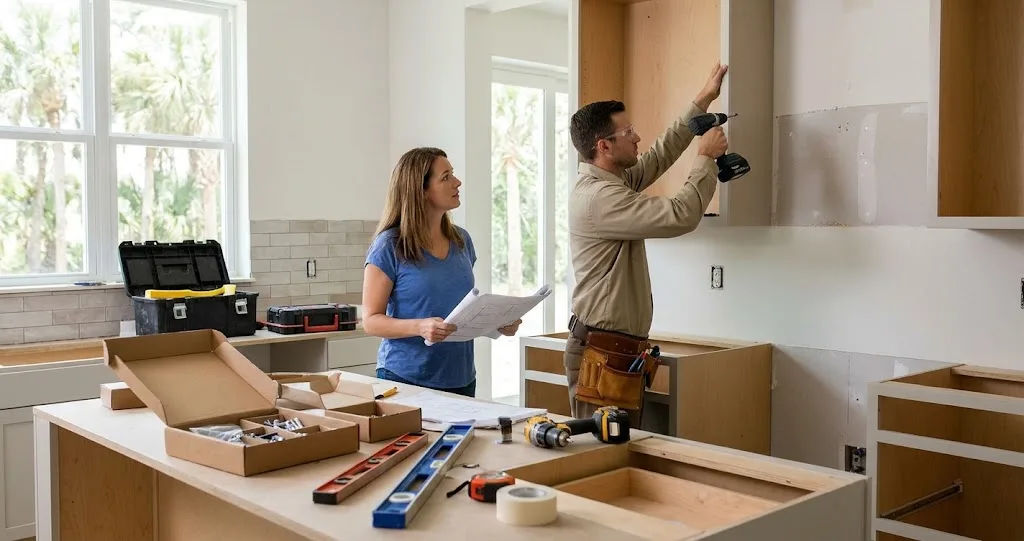 A cabinet that is slightly tilted may not seem like a serious problem at first. However, even a small difference in height or alignment can create several issues. Cabinet doors may not close properly, drawers can slide unevenly, countertops may sit incorrectly, and gaps can appear between neighboring cabinets. These problems can affect both the appearance and everyday use of a kitchen or bathroom.
Understanding why level installation matters helps homeowners make better decisions when planning a renovation. It also explains why professional installers spend considerable time measuring, checking, adjusting, and securing cabinets before considering the project complete.
1. What Does It Mean for Cabinets to Be Level?
A cabinet is considered level when its horizontal surfaces are even from side to side and from front to back. In simple terms, the cabinet should not lean toward the left, right, front, or back.
Leveling is different from making cabinets plumb. Although the two terms are closely related, they describe different measurements.
-
Level: A horizontal surface is even.
-
Plumb: A vertical surface is straight from top to bottom.
-
Square: Two surfaces meet at a precise 90-degree angle.
All three measurements are important during cabinet installation.
For example, a wall cabinet may be level across its bottom edge but still lean slightly forward. Similarly, a cabinet may appear straight from the front but have an uneven top surface.
Professional installers check these measurements throughout the project to ensure that the entire cabinet arrangement fits together correctly.
2. Prevents Cabinet Doors From Opening Unevenly
One of the most noticeable problems caused by unlevel cabinets is improper door movement.
Cabinet doors are designed to hang evenly from their hinges. When the cabinet frame is tilted, the hinges may not sit in their intended positions. This can cause doors to swing open, rub against neighboring doors, or fail to close completely.
Even a small installation error can affect how cabinet doors operate.
Keeps Doors Properly Aligned
Level cabinets help maintain consistent spacing between doors. This creates an attractive appearance and prevents unnecessary contact between neighboring cabinet surfaces.
When doors are aligned correctly, the gaps around them remain relatively even. This makes the entire cabinet arrangement look clean and professionally installed.
Reduces Pressure on Hinges
An uneven cabinet can place additional pressure on hinges and mounting points. Over time, this may contribute to loose screws, worn hardware, and misaligned doors.
Proper leveling helps distribute the weight more evenly and allows hinges to perform as intended.
3. Protects Drawers From Sliding Problems
Drawers depend on properly aligned slides to open and close smoothly. If a cabinet is installed at an angle, drawer slides may not remain in their intended positions.
This can create frustrating problems during everyday use.
Prevents Drawers From Opening Automatically
When a cabinet leans forward, gravity may cause drawers to move outward without being pulled. This can be inconvenient, especially in kitchens where drawers contain utensils, cooking tools, and other frequently used items.
An appropriately leveled cabinet helps reduce this problem.
Improves Drawer Movement
Drawer slides require accurate positioning to operate smoothly. When both sides are properly aligned, drawers can move without excessive friction or binding.
During cabinet installation Jacksonville, installers should check drawer movement after securing the cabinet units. Testing each drawer helps identify alignment problems before the project is finished.
Helps Protect Drawer Hardware
Poor alignment can increase stress on drawer slides, screws, and other moving components.
Correct leveling supports smoother movement and may help extend the useful life of the hardware.
4. Creates a Strong Foundation for Countertops
Countertops need a stable and even supporting structure. Cabinets provide that foundation, making their alignment particularly important.
If the cabinet bases are uneven, the countertop may not rest properly across the entire surface.
This can create several installation challenges.
Prevents Uneven Countertop Support
A countertop supported by uneven cabinets may develop unsupported areas or experience concentrated pressure at certain points.
Depending on the countertop material and installation method, this may increase the risk of movement, stress, or damage.
Stone countertops, including granite and quartz, require especially careful support because they are heavy and can be vulnerable to stress in poorly supported areas.
Helps Create Accurate Seams
Many countertops contain seams where separate sections meet.
If the supporting cabinets are not level, these seams may become difficult to align correctly. One section may sit higher than another, creating an uneven appearance.
Proper cabinet leveling helps countertop installers achieve a smoother, more consistent result.
Makes Backsplash Installation Easier
An uneven countertop can also complicate backsplash installation.
When the countertop surface is level, installers have a more reliable reference point for positioning backsplash materials and maintaining consistent spacing.
5. Improves the Overall Appearance of the Kitchen
Cabinets occupy a significant amount of visual space in most kitchens. Their alignment directly influences how organized and professionally finished the room appears.
Even attractive cabinets can look poorly installed when their edges, doors, and surfaces do not line up.
Maintains Straight Cabinet Lines
Level installation creates consistent horizontal lines across cabinet doors, drawers, and countertop edges.
These details are especially noticeable when multiple cabinets are installed next to each other.
For example, if one base cabinet sits slightly higher than the next, the difference may become visible along the countertop and cabinet face.
Creates Consistent Gaps
Properly aligned cabinets help maintain uniform spacing between doors and drawers.
Consistent gaps create a balanced appearance and make the entire kitchen look more carefully designed.
Supports a Professional Finish
A professional-looking kitchen depends on more than cabinet color, material, and style.
Precise installation brings all these design elements together. During cabinet installation Jacksonville, installers must pay attention to small alignment details because they can make a significant difference in the finished space.
6. Helps Cabinets Remain Securely Attached to Walls
Cabinets, particularly wall-mounted units, can become quite heavy after they are filled with dishes, cookware, food containers, and other household items.
Their installation must therefore provide reliable support.
Leveling contributes to proper positioning, but it is important to understand that level installation alone does not make a cabinet safe. Correct fastening, suitable wall anchors, and attachment to appropriate structural framing are also necessary.
Supports Proper Weight Distribution
An improperly positioned cabinet may create uneven contact with its mounting surfaces.
This can make it harder to achieve consistent support and may place additional stress on certain fasteners.
Correct positioning helps installers establish the intended mounting arrangement.
Helps Prevent Movement
When cabinets are properly aligned and securely fastened, they are less likely to shift during ordinary use.
Installers should check wall conditions, locate studs where appropriate, and use fasteners recommended for the cabinet system and wall construction.
Improves Long-Term Stability
A cabinet installation should remain stable after years of opening doors, pulling drawers, and storing household items.
Accurate measurements, suitable mounting hardware, and careful leveling all contribute to a dependable result.
7. Makes Cabinet Installation Easier and More Accurate
Leveling is not only important for the finished cabinets. It also makes the installation process more predictable.
Walls, floors, and ceilings are rarely perfectly straight. Even in newer homes, small variations can affect cabinet positioning.
Professional installers account for these conditions before attaching the cabinets permanently.
Identifies Uneven Floors
An uneven floor can make base cabinets sit at different heights.
For example, one side of a kitchen may be slightly lower than the other. If installers attach cabinets without correcting the difference, the countertop may not sit evenly.
Shims can help correct these variations by filling small gaps beneath cabinet bases.
Accounts for Uneven Walls
Walls may contain slight curves, bumps, or irregular surfaces.
Installers must check the wall before mounting cabinets. Depending on the situation, they may need to use shims, adjust cabinet positioning, or address wall irregularities.
Reduces Installation Mistakes
Checking measurements throughout the project helps installers identify problems early.
This is much easier than discovering that several cabinets are misaligned after the entire arrangement has been attached.
A careful approach makes cabinet installation Jacksonville more efficient and helps prevent unnecessary adjustments later.
8. Protects Cabinet Materials From Unnecessary Stress
Cabinets are made from different materials, including solid wood, plywood, medium-density fiberboard, and particleboard.
Each material has specific characteristics, but all cabinet systems benefit from proper installation.
An uneven cabinet can experience additional pressure at certain connection points.
Reduces Stress on Cabinet Frames
When neighboring cabinets are not aligned, their connecting points may experience uneven pressure.
This can affect screws, joints, and frame connections over time.
Proper leveling helps cabinets sit in their intended positions and reduces avoidable installation stress.
Helps Protect Cabinet Doors and Panels
Cabinet doors and decorative panels are designed to fit specific openings.
If the cabinet frame becomes twisted or uneven during installation, these components may no longer align correctly.
Careful leveling helps maintain the cabinet's intended shape.
Supports Long-Term Appearance
Cabinet materials can be affected by humidity, temperature changes, and everyday use.
Although leveling cannot prevent every form of wear, it helps establish a stable starting point for the entire cabinet system.
9. Makes Kitchen Appliances Fit Properly
Modern kitchens often include dishwashers, refrigerators, ovens, microwaves, and other built-in appliances.
These appliances must fit within specific spaces, making cabinet alignment particularly important.
Provides Accurate Appliance Openings
Dishwashers and built-in ovens require properly measured openings.
If surrounding cabinets are uneven, the appliance may not fit correctly or may appear crooked after installation.
Helps Maintain Consistent Clearances
Appliances need suitable clearances for doors, ventilation, and operation.
Accurate cabinet positioning helps installers maintain the required spaces around these appliances.
Improves the Finished Kitchen Layout
A kitchen looks more organized when cabinets and appliances follow consistent horizontal and vertical lines.
Proper leveling helps create a coordinated appearance throughout the room.
10. Why Professional Tools Are Important for Leveling
Professional installers use several tools to measure and correct cabinet positioning.
Although some homeowners may attempt installation themselves, having the right tools and understanding how to use them makes a significant difference.
Spirit Level
A spirit level is one of the most common tools used during cabinet installation.
It contains a liquid-filled vial with an air bubble. When the bubble sits between the marked lines, the surface is level.
Installers use it to check cabinet tops, bottoms, and other horizontal surfaces.
Laser Level
A laser level projects a straight reference line across a wall or room.
This is especially useful when installing several cabinets because it provides a consistent reference point.
It can help installers maintain matching cabinet heights across long kitchen walls.
Measuring Tape
A measuring tape helps determine cabinet dimensions, spacing, and installation heights.
Installers use it to check distances between walls, floors, appliances, and neighboring cabinet units.
Shims
Shims are thin wedges made from materials such as wood or plastic.
They are placed beneath or behind cabinets to correct small differences in floor or wall surfaces.
Installers can adjust their thickness and position until the cabinet reaches the correct alignment.
11. How Professionals Level Cabinets During Installation
Professional leveling follows a careful sequence. Each step helps establish an accurate foundation for the next.
Step 1: Inspect the Installation Area
Before beginning, installers examine the walls, floors, and ceiling.
They look for uneven surfaces, obstacles, plumbing connections, electrical outlets, and other conditions that could affect cabinet placement.
This inspection helps identify possible problems before the cabinets are mounted.
Step 2: Measure and Mark Reference Lines
Installers measure the required cabinet heights and mark reference lines on the walls.
These markings help establish consistent positioning for upper and lower cabinets.
A laser level or spirit level may be used to verify the measurements.
Step 3: Position the Base Cabinets
Base cabinets are placed in their intended locations.
Installers check their horizontal alignment and use shims where necessary to correct uneven floor conditions.
They also check the front edges to ensure that neighboring units follow a consistent line.
Step 4: Level and Secure Wall Cabinets
Wall cabinets are positioned using the established reference measurements.
Installers verify that each cabinet is level and plumb before securing it to the appropriate wall framing.
Proper fasteners and mounting methods are essential for safe installation.
Step 5: Connect Neighboring Cabinets
Adjacent cabinet units are aligned and connected according to the cabinet manufacturer's instructions.
Clamps may help hold the units in position while installers check the edges and secure the connections.
Step 6: Perform Final Adjustments
After the cabinets are secured, installers recheck their alignment.
They inspect door spacing, drawer movement, countertop support, and overall appearance.
This final inspection helps identify issues that may have developed during fastening.
12. Common Problems Caused by Poor Cabinet Leveling
Understanding the consequences of improper leveling can help homeowners recognize why professional installation matters.
Some common problems include:
-
Doors that swing open or refuse to close.
-
Drawers that stick, bind, or slide outward.
-
Uneven countertop surfaces.
-
Visible gaps between cabinet units.
-
Misaligned cabinet handles and decorative details.
-
Difficulty fitting built-in appliances.
-
Additional stress on mounting hardware.
-
Uneven backsplash spacing.
-
Reduced visual appeal.
-
Expensive adjustments after installation.
These problems may appear minor individually, but several can occur together when cabinets are installed incorrectly.
Correcting them after countertops, appliances, and backsplashes are installed may require additional labor and expense.
13. Can Homeowners Level Cabinets Themselves?
Homeowners with suitable tools and practical experience can install and level some cabinet systems themselves.
However, the difficulty depends on cabinet size, material, wall construction, floor conditions, and installation complexity.
Small bathroom cabinets may be easier to handle than a complete kitchen arrangement.
Before attempting installation, homeowners should understand the manufacturer's instructions and ensure that they have the necessary equipment.
Wall-mounted cabinets require particular care because they can be heavy and must be securely attached to suitable structural support.
It is also important to avoid relying on drywall anchors alone when the cabinet's mounting requirements call for attachment to wall studs or other approved structural support.
If the walls or floors are significantly uneven, professional assistance can help prevent installation mistakes.
For complicated projects, hiring experienced installers is often a practical decision.
14. How to Choose a Reliable Cabinet Installation Professional
Choosing the right installer is important because accurate measurements and leveling require experience, patience, and attention to detail.
Homeowners should consider several factors before selecting a professional.
Check Previous Experience
Ask whether the installer has experience with the type of cabinets being purchased.
Custom cabinets, framed cabinets, frameless cabinets, and ready-to-assemble products may require different installation techniques.
Ask About Leveling Procedures
A reliable installer should be able to explain how they measure cabinets, correct uneven floors, and check wall alignment.
They should also describe how they secure wall-mounted units.
Review Previous Projects
Photographs of completed installations can help homeowners evaluate workmanship.
Look closely at door spacing, countertop alignment, cabinet edges, and the overall finish.
Discuss Installation Costs
Request a detailed estimate that explains the expected labor, preparation, adjustments, and additional work.
This helps prevent misunderstandings about the project.
Confirm the Final Inspection
Ask whether the installer checks cabinet alignment, door operation, drawer movement, and mounting security before completing the work.
A thorough inspection is an important part of professional service.
15. How Often Should Cabinet Alignment Be Checked?
Properly installed cabinets should not require frequent leveling adjustments.
However, homeowners can occasionally inspect their cabinets to identify signs of movement or hardware problems.
Check whether doors remain aligned, drawers slide smoothly, and cabinet connections appear secure.
If a cabinet begins leaning, moving, or separating from neighboring units, investigate the cause rather than simply adjusting its doors.
Possible causes include loose fasteners, structural movement, water damage, or changes in the surrounding building materials.
Addressing these problems early can help prevent more extensive repairs.
Conclusion
Keeping cabinets level is essential for creating a kitchen or bathroom that looks attractive, functions properly, and remains dependable over time. Although leveling may seem like a small technical detail, it affects almost every part of the finished cabinet system.
From smooth door movement and properly operating drawers to stable countertops and accurate appliance placement, correct alignment supports the entire installation. It also helps reduce unnecessary pressure on cabinet frames, hinges, drawer slides, and mounting hardware.
A successful cabinet installation Jacksonville project begins with accurate measurements and careful preparation. Installers must inspect the walls and floors, establish reliable reference lines, position each cabinet correctly, and make adjustments with suitable tools. They must also ensure that every cabinet is securely attached using appropriate mounting methods.
Homeowners should never judge cabinet installation quality by appearance alone. A cabinet may look straight from a distance while still having alignment problems that affect its operation. Checking level, plumb, and square measurements helps reveal these issues before they become expensive repairs.
Whether you are renovating an existing kitchen, designing a new bathroom, or adding storage to another area of your home, proper cabinet leveling deserves attention. Working with an experienced professional can help ensure that the cabinets fit correctly, operate smoothly, and complement the surrounding space.
Ultimately, cabinet installation Jacksonville should focus on accuracy, stability, and long-term performance. Taking the time to level every cabinet properly creates a strong foundation for a beautiful and functional space that homeowners can enjoy for years.