

Modern technology is changing the way commercial buildings are maintained. From office towers and hotels to residential properties and large commercial complexes, property owners are exploring new methods to keep exterior surfaces clean. One developing solution is drone-based exterior cleaning, which offers an alternative to some traditional window and facade maintenance methods. 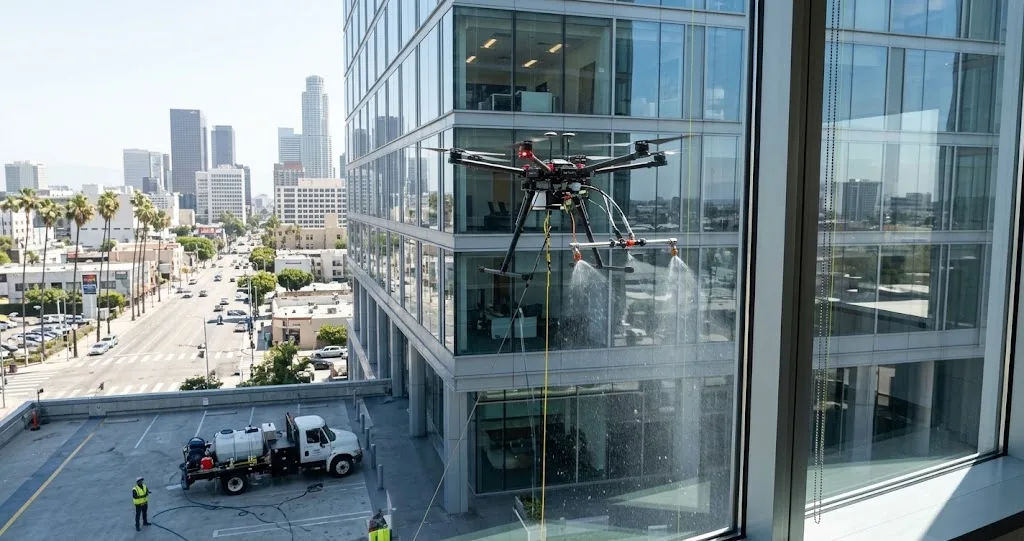 However, an important question remains: Is this technology safe for buildings?
Drone Cleaning los angeles is becoming an interesting option for property managers who want efficient exterior maintenance while reducing the need for certain traditional access methods. Although drones can offer several advantages, their safety depends on the equipment, cleaning process, building materials, weather conditions, and experience of the service provider.
The good news is that professional drone cleaning can be suitable for many building types when the correct procedures are followed. Nevertheless, it is important to understand how the technology works, what risks it may present, and how property owners can make informed decisions before arranging a cleaning service.
This comprehensive guide explains the safety considerations, potential benefits, limitations, and precautions associated with drone-based building cleaning in Los Angeles.
How Drone Building Cleaning Works
Drone Cleaning los angeles uses specially designed aerial equipment to help clean exterior building surfaces. Unlike ordinary consumer drones, professional cleaning systems are designed for commercial maintenance applications.
Depending on the equipment, the drone may use controlled water spraying or a specialized cleaning system to remove dirt, dust, and other surface contaminants.
The Basic Cleaning Process
The process generally involves several stages:
-
Building assessment: The cleaning company evaluates the property's height, exterior materials, accessibility, and cleaning requirements.
-
Equipment selection: A suitable professional drone and compatible cleaning system are selected.
-
Surface inspection: The exterior is examined for visible damage, loose materials, and sensitive areas.
-
Cleaning preparation: The service provider identifies appropriate cleaning products and operating conditions.
-
Exterior cleaning: The cleaning team performs the work while monitoring the equipment and surrounding environment.
-
Final inspection: The cleaned surfaces are checked to identify areas that may require additional attention.
The exact process depends on the building design and the cleaning technology being used.
How Drones Differ From Traditional Cleaning Methods
Traditional exterior cleaning may involve scaffolding, suspended platforms, lifts, or rope-access professionals.
These methods can be appropriate for many properties, but they sometimes require additional preparation and access arrangements.
Drone systems may reduce the need for certain access structures. However, they do not automatically eliminate every safety concern. Professional supervision, appropriate equipment, and building-specific planning remain essential.
Is Drone Cleaning Safe for Different Building Types?
Generally, professional drone cleaning can be safe for suitable buildings when the cleaning method is selected according to the property's construction and condition.
However, not every exterior surface can tolerate the same amount of water pressure, cleaning solution, or contact.
A responsible service provider should evaluate the building before recommending a particular cleaning approach.
Glass Office Buildings
Glass buildings are among the most recognizable structures in Los Angeles. Their large exterior windows often collect dust, pollution, fingerprints, and environmental deposits.
Drone cleaning may be suitable for certain glass facades when the equipment uses an appropriate cleaning method.
The service provider should consider:
-
Glass type and condition.
-
Existing scratches or cracks.
-
Window seals and surrounding frames.
-
Appropriate water pressure.
-
Compatibility of cleaning solutions.
-
Weather conditions during cleaning.
Using an unsuitable cleaning method could damage vulnerable glass or affect surrounding components. Therefore, professional assessment is important.
Concrete and Stone Buildings
Concrete and stone exteriors can collect dirt, pollution, and biological growth over time.
Some surfaces are relatively durable, while others have delicate finishes, decorative coatings, or signs of deterioration.
Before cleaning, professionals should consider whether the surface can tolerate the proposed cleaning method.
Older stone buildings deserve particular attention because damaged mortar, loose pieces, and deteriorating finishes may require repairs before cleaning begins.
Metal and Composite Facades
Modern commercial properties frequently use aluminum panels, metal cladding, and composite materials.
These materials can generally be maintained using suitable cleaning products and controlled methods.
However, harsh chemicals or inappropriate cleaning pressure may affect protective coatings, finishes, or joints.
A professional assessment helps identify the correct cleaning approach for each exterior material.
Potential Risks of Drone Cleaning for Buildings
Although this cleaning technology offers several advantages, it is important to recognize that improper use can create problems.
Understanding possible risks helps property owners choose a suitable service provider.
1. Excessive Water Pressure
Water pressure is one of the most important factors in exterior cleaning.
Different building materials have different levels of resistance. Excessive pressure may damage delicate surfaces, weaken old finishes, or force water into areas that are not properly sealed.
Professional cleaning companies should use a method appropriate for the building's condition and materials.
2. Damage to Window Seals
Windows depend on seals to prevent moisture and air from entering the building.
If water reaches damaged seals or vulnerable joints, it may contribute to moisture problems inside the property.
Before cleaning, professionals should inspect visible areas around windows and identify existing problems.
3. Loose Exterior Materials
Older buildings sometimes have loose panels, damaged mortar, deteriorating coatings, or weakened decorative elements.
Cleaning these areas without an inspection could make an existing problem worse.
A responsible company should identify these conditions before beginning work and recommend repairs when necessary.
4. Unsuitable Cleaning Chemicals
Not every cleaning product is appropriate for every building material.
Some chemicals may discolor metal, affect protective coatings, damage painted surfaces, or leave unwanted marks on glass.
The cleaning company should select products according to manufacturer recommendations and the property's exterior materials.
5. Weather-Related Problems
Weather conditions can influence both cleaning quality and equipment safety.
Strong winds, rain, poor visibility, and changing environmental conditions may affect drone stability and the ability to complete the work safely.
Professional operators should evaluate conditions before starting and postpone the service when circumstances are unsuitable.
Important Safety Measures Used During Drone Cleaning
Safety should be a priority throughout the cleaning process. Professional companies need procedures that protect the building, workers, pedestrians, nearby properties, and the surrounding environment.
Here are several important considerations.
Professional Equipment Inspection
Cleaning equipment should be maintained and inspected regularly.
A professional service provider should check that its equipment is suitable for the planned work and that the cleaning system is functioning correctly.
Damaged or poorly maintained equipment can increase the possibility of unexpected problems.
Qualified Drone Operators
The person operating a commercial cleaning drone should understand aviation requirements and the equipment being used.
In the United States, commercial drone operations generally fall under Federal Aviation Administration (FAA) Part 107 requirements.
These rules address operator qualifications, aircraft registration, operating limitations, and other safety responsibilities. The FAA also requires visual-line-of-sight operations unless an applicable waiver or authorization allows otherwise.
This is particularly important when cleaning tall buildings in busy urban areas.
Protection for Pedestrians and Employees
Commercial buildings often have people walking nearby, employees working inside, and vehicles entering or leaving the property.
A professional cleaning plan should consider how to protect everyone in the surrounding area.
Depending on the location, this may involve restricting access to certain areas, communicating with building management, and coordinating the work schedule.
Appropriate Cleaning Solutions
Cleaning products should be selected according to the surface being treated.
A solution suitable for ordinary glass may not be appropriate for natural stone, painted metal, or specialized exterior coatings.
The service provider should understand product compatibility and follow applicable manufacturer instructions.
Inspection After Cleaning
A final inspection helps confirm that the cleaning work has been completed appropriately.
Property managers should check for visible marks, missed areas, unexpected moisture, or changes to the exterior finish.
If a concern is identified, it should be documented and discussed with the cleaning company.
How Drone Cleaning Protects Building Structures
One reason property owners consider aerial cleaning technology is the possibility of reducing unnecessary physical contact with exterior surfaces.
Traditional cleaning methods sometimes involve equipment that must be positioned close to building facades.
Drone systems may reduce the need for certain types of direct access equipment, depending on the project.
Reduced Physical Contact
Some exterior cleaning methods require workers or equipment to operate close to windows, panels, and decorative features.
A suitable drone-based system can clean certain surfaces without workers physically touching every section.
This may reduce some contact-related risks, particularly around delicate exterior finishes.
However, the cleaning equipment itself must still be operated carefully.
Better Access to Difficult Areas
Some buildings have architectural features that are difficult to reach using conventional equipment.
These may include tall glass sections, recessed exterior areas, and certain complex facades.
Drone cleaning may provide access to suitable locations without requiring extensive temporary access structures.
Nevertheless, not every difficult-to-reach area is suitable for drone cleaning. Some locations may still require traditional inspection or maintenance methods.
Support for Regular Maintenance
Regular exterior cleaning helps property owners identify visible changes in building conditions.
Dust, pollution, and environmental deposits can hide minor surface issues.
Cleaning may make certain problems easier to notice, although it should not be considered a replacement for a professional building inspection.
Is Drone Cleaning Suitable for High-Rise Buildings in Los Angeles?
Los Angeles has a wide variety of commercial and residential properties, including modern skyscrapers, apartment buildings, hotels, and office complexes.
Many of these buildings have large exterior surfaces that require regular maintenance.
Drone cleaning may be suitable for some high-rise properties, but each project requires individual consideration.
Building Height and Design
Building height affects the type of equipment and cleaning approach that may be appropriate.
Architectural details also matter. Curved walls, recessed windows, balconies, and irregular surfaces can make certain areas more challenging to clean.
A service provider should understand these features before recommending aerial cleaning.
Wind Conditions Around Tall Buildings
Wind behavior around tall structures can differ from conditions at ground level.
Air movement may be affected by surrounding buildings, open spaces, and architectural features.
This makes weather assessment especially important for high-rise projects.
A professional operator should follow appropriate operating limits rather than attempting to complete work in unsuitable conditions.
Busy Commercial Locations
Downtown Los Angeles contains offices, retail properties, hotels, and other buildings surrounded by regular pedestrian and vehicle activity.
Aerial cleaning in these locations requires careful coordination.
Building managers should understand the proposed work schedule, safety arrangements, and any restrictions that may affect nearby activities.
Compliance With Local and Federal Requirements
Property owners should confirm that the cleaning company understands the relevant aviation rules and local requirements.
The Los Angeles Municipal Code addresses drone operations, including restrictions against careless or reckless operation that endangers people or property.
Certain locations may also have additional restrictions. For example, the Port of Los Angeles identifies itself as a no-drone zone for public drone use.
Port of Los Angeles
This means that a company should evaluate the specific property location instead of assuming that drone operations are permitted everywhere.
Drone Cleaning Compared With Traditional Building Cleaning
Both drone-based and traditional cleaning methods can be useful. The best choice depends on the property's design, condition, accessibility, and maintenance requirements.
|
Factor |
Drone Cleaning |
Traditional Cleaning |
|---|---|---|
|
Exterior access |
Aerial access for suitable surfaces |
Lifts, platforms, scaffolding, or rope access |
|
Physical contact |
May reduce direct contact |
Often involves closer physical access |
|
Preparation |
Requires flight and cleaning assessment |
May require access equipment and setup |
|
Building suitability |
Depends on facade and conditions |
Suitable for many complex maintenance tasks |
|
Inspection |
Requires separate assessment where needed |
May allow closer physical examination |
|
Weather sensitivity |
Strongly affected by operating conditions |
Also affected by weather and site conditions |
Which Method Is Better for Delicate Buildings?
There is no universal answer.
A modern glass building with suitable exterior surfaces may be a good candidate for drone cleaning.
However, an older property with damaged stonework, loose panels, or complicated architectural details may require conventional maintenance methods.
The safest option is the one that addresses the building's actual needs without introducing unnecessary risks.
How to Choose a Reliable Drone Cleaning Company in Los Angeles
Selecting the right service provider is one of the most important decisions property owners can make.
A company should demonstrate that it understands both exterior building maintenance and professional drone operations.
Check Operator Qualifications
Ask whether the commercial drone operators hold the appropriate FAA Remote Pilot Certificates.
Also ask about their experience with commercial exterior cleaning rather than assuming that general drone experience is sufficient.
Ask About Insurance Coverage
Insurance is an important consideration for commercial property maintenance.
Before signing an agreement, ask for proof of appropriate liability coverage and clarify whether the policy covers drone operations and the proposed cleaning activity.
Property owners should also understand what happens if equipment or cleaning activities cause accidental property damage.
Request a Building Assessment
A reliable company should not recommend a cleaning method without understanding the property.
Ask whether the company evaluates:
-
Exterior building materials.
-
Window condition and seals.
-
Existing structural concerns.
-
Property height and architectural design.
-
Nearby pedestrian activity.
-
Weather-related limitations.
-
Cleaning product compatibility.
A proper assessment helps prevent avoidable problems.
The Cleaning Process
Property managers should know what equipment and cleaning methods will be used.
Ask about the cleaning solution, water pressure suitability, surface compatibility, and inspection procedures.
A professional company should explain these matters in clear language.
Review Previous Commercial Projects
Experience with similar properties can help property owners understand whether a company is suitable for their project.
Ask for examples of previous commercial cleaning work, references, and relevant project documentation.
Look for evidence that the company understands the challenges associated with different building materials and heights.
How Often Should Buildings Receive Drone Cleaning?
Cleaning frequency depends on the building's location, surrounding environment, exterior materials, and exposure to pollution.
Properties in busy urban areas may collect dust and environmental deposits more quickly than buildings in quieter locations.
Office Buildings
Office buildings with large glass facades often benefit from a regular exterior maintenance schedule.
Property managers can arrange cleaning according to visible dirt accumulation, seasonal conditions, and tenant expectations.
Hotels and Commercial Properties
Hotels and other customer-facing businesses often prioritize clean exterior surfaces because the building's appearance influences visitors' first impressions.
Regular maintenance can help keep windows and exterior panels presentable.
Residential Buildings
Apartment complexes and residential towers also require exterior maintenance.
Property managers should consider resident comfort, access arrangements, building materials, and the potential disruption associated with cleaning activities.
There is no single cleaning schedule suitable for every property. A professional assessment can help determine an appropriate maintenance frequency.
Can Drone Cleaning Disrupt Building Operations?
Another concern for property managers is whether exterior cleaning will interfere with normal business activities.
Drone cleaning may reduce some disruption associated with installing traditional access equipment. However, it still requires coordination.
Planning Around Business Hours
Cleaning companies can discuss suitable working hours with property management.
For office buildings, scheduling work during quieter periods may help reduce inconvenience for employees and visitors.
Communicating With Tenants
Building managers should inform tenants about planned exterior maintenance.
Clear communication helps people understand what work is taking place and whether temporary access restrictions are expected.
Managing Noise and Surrounding Activity
Professional cleaning equipment can produce noise, and aerial operations may attract attention.
The company should explain what tenants can expect and how surrounding areas will be managed.
Environmental Considerations of Drone Building Cleaning
Environmental responsibility is another important part of modern building maintenance.
Although drone cleaning can offer operational advantages, property owners should also consider water consumption, cleaning chemicals, and wastewater management.
Responsible Water Usage
The cleaning company should use an appropriate amount of water for the surface and level of contamination.
Unnecessary water consumption can increase operating costs and environmental impact.
Environmentally Appropriate Cleaning Products
Where suitable, property owners can ask about cleaning products with lower environmental impact.
However, environmentally friendly products must still be compatible with the building material and effective for the cleaning task.
Wastewater Management
Cleaning operations should consider where wastewater will travel.
This is particularly important in urban areas where runoff may reach sidewalks, landscaping, or stormwater drainage systems.
A professional service provider should follow applicable environmental requirements and avoid unnecessary contamination.
Common Myths About Drone Cleaning Safety
Some property owners hesitate to consider new cleaning technology because they are unfamiliar with how it works.
Understanding the difference between common assumptions and practical realities can help them make better decisions.
Myth 1: Drones Always Damage Windows
This is not necessarily true.
Appropriate cleaning equipment and compatible cleaning methods can be used on suitable glass surfaces.
However, damaged glass, vulnerable seals, and unsuitable cleaning pressure can create problems.
The building must be assessed before work begins.
Myth 2: Drone Cleaning Is Risk-Free
No exterior cleaning method is completely risk-free.
Drone operations involve aviation, equipment, weather, and property-related considerations.
Professional planning and suitable safety measures help manage these risks.
Myth 3: Drone Cleaning Works on Every Building
Different buildings have different exterior materials and architectural designs.
Some properties may be suitable for aerial cleaning, while others may require traditional access methods or specialized maintenance.
A professional assessment determines whether the technology is appropriate.
Myth 4: Drones Replace Building Inspections
Drone cleaning is a maintenance service, not a substitute for structural inspections.
Building owners should continue arranging appropriate inspections to identify hidden defects, water intrusion, deteriorating materials, and other structural concerns.
Questions to Ask Before Booking Drone Cleaning
Before hiring a service provider, property owners should ask several important questions.
-
Does the company have experience cleaning buildings similar to mine?
-
Are the drone operators appropriately qualified?
-
Does the company carry suitable insurance?
-
How will the exterior materials be protected?
-
Which cleaning products will be used?
-
How does the company assess weather conditions?
-
What precautions will protect pedestrians and employees?
-
Will the company inspect the building before cleaning?
-
How will the finished work be evaluated?
-
What alternative cleaning methods are available if drone cleaning is unsuitable?
These questions can help property managers evaluate service quality and understand the safety arrangements before approving a project.
Conclusion
So, is drone cleaning safe for buildings in Los Angeles? The answer is yes, provided that the technology is used appropriately, the building is suitable, and qualified professionals follow the necessary safety procedures.
Drone cleaning offers an interesting alternative to certain traditional exterior maintenance methods. It may reduce the need for some access equipment, provide access to difficult exterior surfaces, and support more convenient cleaning schedules.
However, these benefits should never come at the expense of building protection or public safety.
Property owners must consider exterior materials, window seals, existing structural conditions, cleaning pressure, chemical compatibility, weather, and nearby pedestrian activity before choosing a service.
Choosing an experienced company is equally important. Professional operators should understand FAA requirements, carry appropriate insurance, inspect the property, and explain their cleaning procedures clearly.
For commercial properties, apartment complexes, hotels, and office buildings, a carefully planned maintenance strategy can help maintain exterior appearance while protecting the building's long-term condition.
Ultimately, Drone Cleaning los angeles can be a safe and practical option for suitable properties when professional standards guide every stage of the process. The most important decision is not simply choosing modern technology. It is choosing a cleaning method that matches the building's specific requirements and protects its value over time.