

A barber cape is more than a simple protective covering. For many modern barbershops, it can also become part of the shop’s visual identity. Personalized barber capes can be designed with names, colors, graphics, and logos, making them a practical way to give every haircut a more professional and recognizable appearance. But how exactly are logos added, and what should you consider before ordering capes with your shop branding?
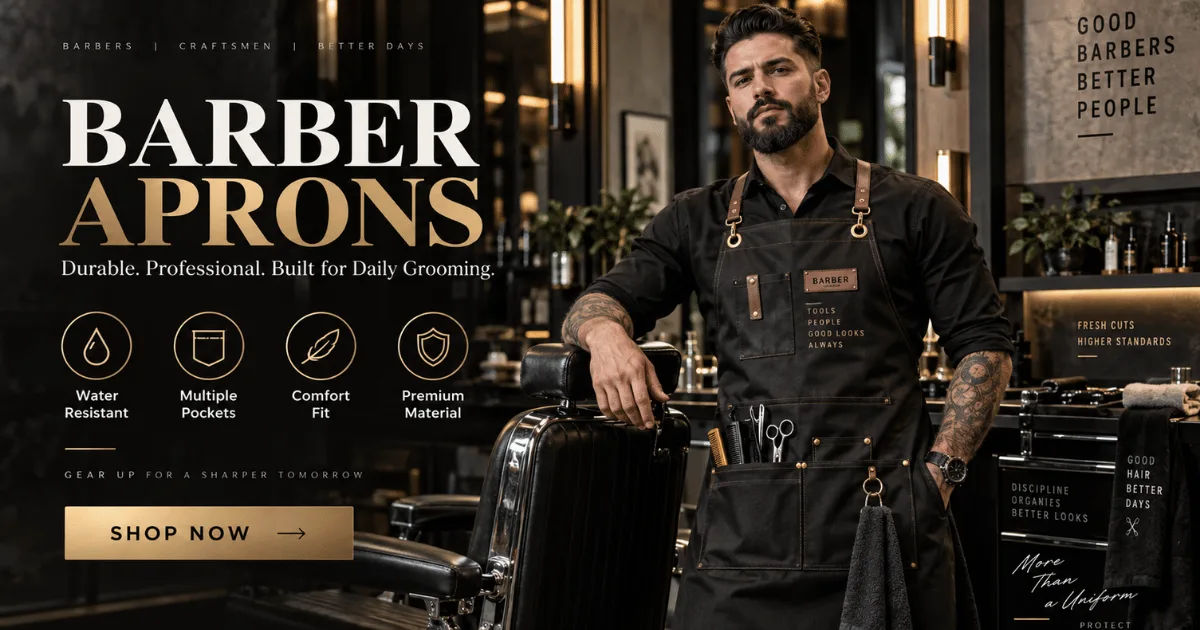
Yes, logos can generally be added to personalized barber capes. The logo may be printed, embroidered, transferred, or applied using another customization method depending on the cape material and the supplier’s available options.
The important part is choosing a logo placement and customization method that can handle regular washing, repeated use, and the movement that naturally occurs during haircuts.
Why Put a Logo on a Barber Cape?
Branding is one of the simplest ways to make a barbershop look more established.
When a client sits in the chair, the cape covers a large portion of their clothing. A well-designed logo placed on that visible surface can make the brand noticeable throughout the service.
This can be particularly useful when clients take photos or videos during their appointments. A branded cape can appear naturally in social media content without requiring the barber to add a separate advertisement.
A logo can also help create consistency. If the chairs, walls, uniforms, towels, and capes use similar branding, the entire shop can have a more professional appearance.
Creating a Consistent Brand Image
A business logo is usually designed to represent the personality of the company. Using the same logo across different customer-facing items helps reinforce that identity.
For example, a classic barbershop might use a simple black-and-white emblem, while a modern shop could use a more colorful or minimalist design.
The cape should complement that style rather than compete with it.
Making the Shop Look More Professional
Small details can have a surprisingly strong effect on how a business is perceived.
A clean cape with a well-positioned logo can look more polished than a completely generic cape. It gives customers the impression that the shop has paid attention to the details of the experience.
This does not mean a logo automatically makes a business better. The haircut, cleanliness, customer service, and overall experience still matter most. Branding simply helps present those qualities consistently.
How Are Logos Added to Personalized Barber Capes?
There are several ways manufacturers can add logos to a cape. The right choice depends on the fabric, design, budget, and expected frequency of use.
Screen Printing
Screen printing is a traditional method that can work well for certain cape materials and simple designs.
Ink is applied to the fabric through a prepared screen. The result can be clean and visually strong, especially when the logo uses a limited number of colors.
One advantage is that screen printing can be economical when ordering a larger number of capes.
However, the quality depends heavily on the fabric and printing process. The supplier should be able to explain how the printed design will respond to repeated washing.
Heat Transfer Printing
Heat transfer involves applying a printed design to the cape using heat and pressure.
This method can reproduce detailed logos and multiple colors. It may also be useful for smaller orders where traditional screen printing is less practical.
The major consideration is durability. A transfer that looks excellent when new may not perform the same way after frequent washing, drying, and daily shop use.
Ask the supplier about recommended washing instructions before choosing this method.
Embroidery
Embroidery creates the logo by stitching thread directly into the fabric.
It can give a cape a premium and textured appearance. Embroidered logos are especially attractive when the design is relatively simple and the cape material can support stitching.
However, embroidery is not suitable for every cape. Very lightweight or slippery fabrics may not be ideal for heavy stitching.
The size of the logo also matters. Fine details may become difficult to reproduce accurately when converted into stitches.
Direct-to-Garment or Specialized Printing
Some suppliers offer more advanced printing processes that can reproduce detailed graphics and gradients.
These options can be useful for businesses with complicated logos or specific visual requirements.
The important thing is not simply choosing the newest technology. The customization process needs to be compatible with the cape's actual fabric and intended use.
Where Should the Logo Go?
Logo placement is just as important as the customization method.
A logo that is too large can make the cape look cluttered. One that is too small may barely be visible.
Center Chest Area
A logo positioned around the upper center of the cape is one of the most noticeable options.
It can be clearly visible while the client is seated, making it useful for photographs and videos.
However, the design should not interfere with the barber's work or become distorted when the cape moves.
Shoulder or Upper Side Area
Placing a smaller logo near the shoulder can create a more subtle appearance.
This works particularly well for minimalist branding. Instead of making the logo the main feature of the cape, it becomes a small professional detail.
Lower Front Area
A logo toward the lower portion of the cape can provide branding without putting the design directly in front of the barber.
This can be useful when the business wants a more understated look.
The exact location should be tested against the cape's shape because some capes fold or bunch differently during a haircut.
What Kind of Logos Work Best?
Not every logo translates equally well onto fabric.
A highly detailed logo may look excellent on a computer screen but lose some of its detail when printed or embroidered.
Simple logos usually work particularly well.
Strong shapes, readable lettering, and clear lines are easier to reproduce. If the logo contains very small text, ask for a recommendation about the minimum practical size.
Consider the Cape Color
Contrast matters.
A dark logo on a dark cape may be difficult to see. Likewise, a light design on a very light cape can disappear.
The best combination creates enough contrast for the logo to remain recognizable without looking overly bright.
Keep Small Text Readable
If the logo includes a business name or slogan, make sure the lettering is large enough to remain legible.
This is especially important with embroidery because extremely fine lettering can become difficult to reproduce.
Sometimes removing unnecessary small text produces a cleaner and more recognizable branded cape.
Are Personalized Barber Capes Durable?
They can be, but durability depends on both the cape itself and the customization technique.
Barber capes are exposed to hair, water, styling products, disinfectants, repeated folding, and frequent washing. A decorative finish needs to tolerate those conditions.
This is why the cheapest customization option is not always the best long-term choice.
Before ordering, ask questions about washing temperature, drying recommendations, ironing restrictions, and expected lifespan of the logo.
A supplier that understands professional barber use should be able to provide clear care instructions.
What Fabric Is Best for Logo Customization?
The cape fabric affects both comfort and branding.
Polyester is commonly used because it can be lightweight, water-resistant, and relatively easy to clean. It can also work with various printing methods.
Nylon and other synthetic materials may have different customization requirements.
The most important consideration is compatibility. Do not assume that a particular printing or embroidery method will work equally well on every fabric.
If the cape is being used every day in a busy barbershop, prioritize a fabric that is comfortable for clients and practical to maintain.
How Many Capes Should a Barbershop Order?
The answer depends on the size of the shop and how frequently capes are cleaned.
A single barber who works independently may need fewer capes than a busy shop with several chairs.
Having several capes available allows used ones to be removed for cleaning while fresh ones remain available.
When ordering customized products, it can also be worth purchasing enough matching pieces to maintain a consistent appearance. If the design is discontinued later, replacing only a few capes may result in noticeable differences in color or logo placement.
Should Each Barber Have a Different Logo?
Usually, the main business logo should remain consistent.
However, personalization can go beyond the company logo. Individual barber names or initials can sometimes be added alongside the main branding.
This can be useful in larger shops where each barber has a recognizable personal identity.
For example, the front of the cape might feature the shop logo while a smaller name appears near the shoulder.
The key is moderation. Too many design elements can make the cape look more like promotional merchandise than professional equipment.
How to Order Customized Capes With Logos
Start with a high-quality version of your logo.
A vector file is often preferred because it can be resized without losing clarity. If you only have a low-resolution image, ask the supplier whether they can work with it or whether the design needs to be prepared again.
Next, decide how you want the logo to look on the cape.
Think about its size, location, colors, and whether you want additional information such as a barber's name.
It is also useful to request a digital proof before production. This gives you an opportunity to check the proportions and placement.
Ask About a Sample
If the order is large, consider requesting a sample first.
A digital mockup cannot always show how a logo will look on real fabric. A physical sample lets you inspect the print quality, stitching, color, size, and overall appearance.
This is especially valuable for a business ordering capes for several barbers.
Common Mistakes to Avoid
One common mistake is making the logo unnecessarily large.
A barber cape is functional equipment first. Branding should enhance its appearance without making the cape uncomfortable or distracting.
Another mistake is ignoring maintenance.
A design that requires delicate care may become inconvenient in a busy barbershop. Professional equipment needs to fit naturally into the shop's daily routine.
Choosing poor color contrast is another issue. A beautiful logo can become almost invisible if the cape and branding colors are too similar.
Finally, do not skip the proofing stage. Small placement errors can become expensive when dozens of customized capes have already been produced.
Can Personalized Barber Capes Be Used for Marketing?
Absolutely.
A branded cape can function as subtle marketing during every haircut.
When customers photograph their new hairstyle, the cape may appear in the background. If they share the image online, the shop's branding can appear naturally as part of the content.
This is not the same as a dedicated advertisement, but it can strengthen brand recognition over time.
For barbers who create frequent social media content, consistent branded equipment can also make videos and photographs look more professional.
Conclusion
Yes, personalized barber capes can show logos, and there are several ways to customize them. Printing, heat transfers, embroidery, and specialized techniques can all be suitable depending on the cape material, logo design, budget, and expected use.
The best approach is to think about the entire product rather than the logo alone. Choose a comfortable and practical cape, select a customization method that can withstand regular cleaning, and make sure the logo has enough contrast to remain visible.
Placement also deserves attention. A centered logo can provide strong visibility, while a smaller shoulder or lower-front design can create a more understated professional appearance.
For a barbershop, the goal should not be to make the cape look like an advertisement. The strongest designs usually feel like a natural extension of the business's identity.
A simple, recognizable logo on a well-made cape can make the customer experience feel more organized and consistent. When combined with good service, clean equipment, and a strong visual identity, branded capes become a practical part of the shop rather than just another promotional item.