

When people see a link online, they make a quick judgment before deciding whether to click it. A long, confusing URL can look suspicious, difficult to remember, or simply unimportant. A clean and recognizable link, on the other hand, can immediately create a sense of trust. 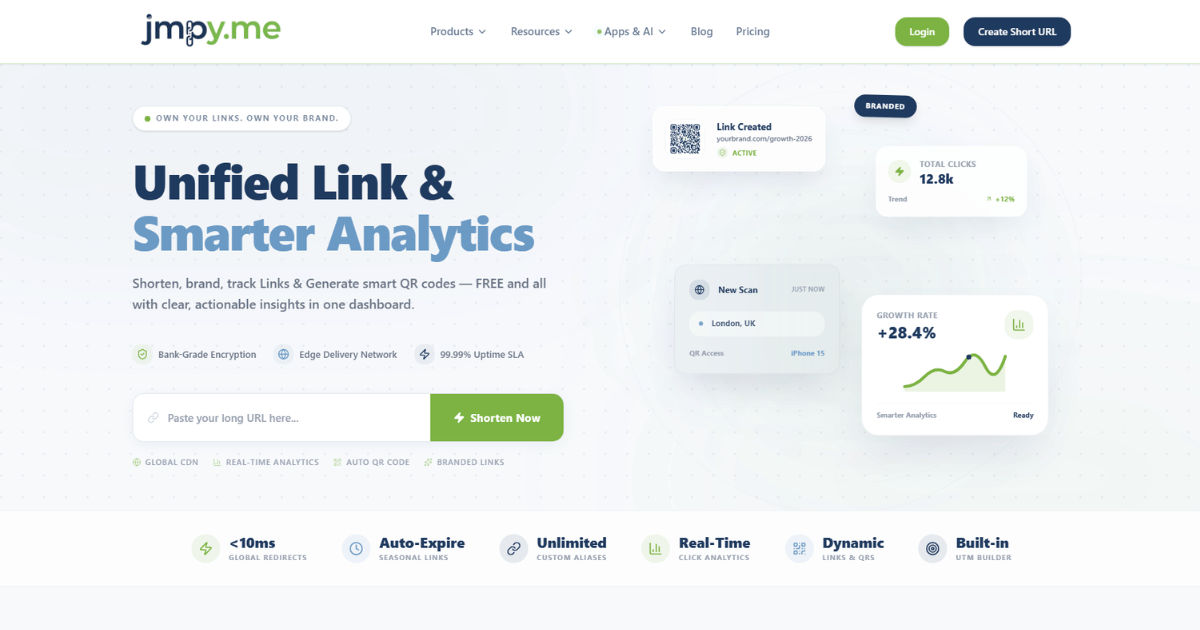 This is one of the reasons custom branded short links have become increasingly useful for businesses, marketers, creators, and organizations that want to improve their online campaigns.
Branded tracking links combine two important ideas: recognizable branding and measurable link performance. Instead of sharing an anonymous-looking shortened URL, a business can use a link that reflects its own name or brand identity. At the same time, tracking features can provide information about how many people clicked, when they clicked, and which campaigns generated the most engagement.
The result is more than just a shorter URL. A well-designed branded tracking link can make a link easier to recognize, improve trust, strengthen brand visibility, and help marketers understand what encourages people to take action.
But do branded tracking links actually increase clicks? The answer is often yes, although the impact depends on how the links are used, where they are shared, and how trustworthy the overall campaign appears. The link itself is only one part of the equation, but it can play an important role in reducing hesitation and making a call to action more appealing.
This guide explains how branded tracking links work, why they can increase click-through rates, what psychological factors influence their performance, and how businesses can use them effectively.
What Are Branded Tracking Links?
A branded tracking link is a shortened URL that uses a recognizable brand name, custom domain, or branded keyword while also recording information about link activity.
A traditional URL may contain a long combination of letters, numbers, symbols, and tracking parameters. These URLs can become difficult to read, especially when they are copied into social media posts, emails, advertisements, or printed materials.
A shortened link removes unnecessary length. A branded version goes a step further by making the link recognizable.
For example, imagine a company promoting a new product. Instead of sharing a long URL containing multiple tracking parameters, the company could use a short link based on its own brand identity.
The person receiving the link can immediately see who is behind it.
Tracking information is then collected when someone clicks the link. Depending on the platform being used, marketers may be able to see information such as total clicks, approximate location, device type, referral source, and campaign performance.
This creates a combination of three benefits:
-
The link is shorter.
-
The link looks more trustworthy and recognizable.
-
The link can provide useful performance data.
That combination makes branded tracking links valuable for both marketing and analytics.
Why Do People Hesitate to Click Unknown Links?
Before understanding why branded links can increase clicks, it helps to understand why people sometimes avoid clicking links in the first place.
Internet users have become more careful about online security. Phishing attacks, scams, malware, and fake websites have made people suspicious of unfamiliar URLs.
A link that looks random can create uncertainty.
People may ask themselves:
"Where will this link take me?"
"Is this website legitimate?"
"Could this be a scam?"
"Why does the URL look so strange?"
These questions can stop someone from clicking.
A generic shortened URL may hide the final destination completely. While this is not automatically dangerous, some users may feel uncomfortable clicking a link when they cannot identify the organization behind it.
A branded link can reduce this uncertainty.
When the link contains a recognizable brand or company name, the user has more context before clicking. The link itself becomes a small trust signal.
This does not guarantee a click, but it can remove one potential barrier.
How Brand Recognition Influences Click Behavior
Brand recognition plays an important role in online decision-making.
People are generally more comfortable interacting with brands they recognize. If someone sees a company name they already know, they may be more willing to open the associated link.
This is especially important when links are shared in crowded digital environments.
Consider a social media feed. Users may scroll past dozens of posts in a few minutes. They are constantly deciding what deserves attention.
A recognizable link can reinforce the identity of the person or business sharing it.
The user does not have to spend as much time wondering about the source.
This is particularly useful for established brands, but smaller businesses can benefit too. Consistent use of a branded domain can gradually increase familiarity over time.
Every time someone sees the same recognizable link structure, the brand becomes more familiar.
That familiarity can eventually influence click behavior.
Branded Links Build Trust
Trust is one of the most important factors affecting online clicks.
A person may be interested in a product, article, video, or offer but still hesitate if the link looks suspicious.
Branded tracking links can help address this problem by clearly connecting the destination with the organization sharing it.
For example, a company sending an email campaign can use a branded link that matches its website identity. A social media account can use links that are clearly connected to the same brand.
This consistency helps users understand that the link belongs to the same organization.
Trust is especially important when the link leads to an action involving personal information, purchases, registrations, or account creation.
A recognizable link does not replace good security practices, but it can make the first interaction feel more transparent.
Shorter Links Are Easier to Read
Long URLs can be visually overwhelming.
They may contain tracking codes, session identifiers, product categories, database information, and other technical elements.
For a regular internet user, most of this information is meaningless.
A shorter link is easier to understand and remember.
This matters because people often make quick decisions online. If a link is simple and readable, the user can process it faster.
Short links are also easier to include in advertisements, social media captions, presentations, printed materials, and messaging apps.
The cleaner appearance can make the call to action look more professional.
A professional appearance may indirectly influence clicks by making the entire campaign feel more organized and trustworthy.
Branded Links Make the Destination More Predictable
One reason people avoid unknown links is uncertainty.
A recognizable branded link gives users a basic idea of where they are going.
Suppose a user sees a link containing a familiar company name. Even if they do not know the exact page, they can understand the general source.
That small amount of information can reduce hesitation.
People tend to feel more comfortable when they have some control over their decisions. A transparent link gives them more context before they click.
This is especially useful in email marketing and social media, where users may be cautious about unfamiliar destinations.
Tracking Data Helps Improve Future Campaigns
The word "tracking" in branded tracking links is important.
The main advantage is not simply knowing that a link received clicks. The real value comes from understanding why those clicks happened.
Tracking data can show marketers which campaigns perform well and which ones need improvement.
For example, a business might share the same landing page through:
-
Email newsletters
-
Facebook posts
-
Instagram campaigns
-
LinkedIn content
-
Online advertisements
-
QR codes
-
Printed brochures
Each channel can use a different tracking link.
The marketer can then compare performance.
If one campaign generates significantly more clicks than another, the business can investigate what made it more successful.
Perhaps the audience was more relevant.
Maybe the headline was stronger.
The timing could have been better.
The call to action may have been clearer.
Tracking helps marketers move away from guessing and toward evidence-based decisions.
Better Data Can Lead to More Clicks Over Time
A branded tracking link may not automatically create a dramatic increase in clicks on its own.
However, the data it provides can help improve future marketing decisions.
This creates a long-term advantage.
Imagine a company running several campaigns. Without tracking, the marketing team may only know the total number of visitors to the website.
With tracking, the team can identify which links generated those visits.
Over time, marketers can learn patterns.
They may discover that certain messages receive more attention. They may find that one audience responds better to educational content while another prefers product offers.
They can then adjust future campaigns based on actual behavior.
The result can be higher click-through rates over time.
In this sense, tracking does not directly force people to click. Instead, it helps marketers understand what encourages clicks and repeat those successful strategies.
Branded Tracking Links Improve Campaign Measurement
Marketing campaigns often involve multiple platforms.
A company may promote the same offer across email, social media, paid advertising, and offline marketing.
If every channel sends users to the same URL without separate tracking, it becomes difficult to determine which channel is responsible for the traffic.
Branded tracking links solve part of this problem.
A unique link can be assigned to each campaign or channel.
The business can then compare results.
For example, a company may discover that an email campaign generated more qualified visitors than a social media campaign, even though the social media post received more total clicks.
This distinction is valuable.
Clicks are important, but marketers should also consider what happens after the click.
A campaign that generates fewer clicks but more sales may be more successful than a campaign with thousands of low-quality visitors.
Tracking helps businesses see this difference.
Better Targeting Can Increase Click-Through Rates
Tracking data can also improve audience targeting.
Suppose a company notices that a particular type of content receives strong engagement from one audience segment.
The company can create more content that matches that audience's interests.
Over time, the marketing message becomes more relevant.
Relevance is a powerful driver of clicks.
People are more likely to click when they believe the content will provide something useful to them.
Branded tracking links contribute to this process by helping marketers identify which audiences and campaigns respond best.
The link becomes part of a larger feedback system.
Campaign is launched.
Users interact with it.
Data is collected.
Performance is analyzed.
The next campaign is improved.
This cycle can gradually increase engagement.
They Make Links More Memorable
A clean branded link can be easier to remember than a random string of characters.
This is useful when a link is shared verbally or displayed in a physical location.
For example, a speaker at an event might tell the audience to visit a short branded link.
A long URL would be difficult to remember and nearly impossible to type correctly.
A short branded address is easier to recall.
The same principle applies to posters, brochures, business cards, presentations, and product packaging.
When users can remember a link, they are more likely to visit it later.
This can generate additional traffic that might not happen with a complicated URL.
Branded Links Can Strengthen Brand Visibility
Every link shared by a business can represent another branding opportunity.
Most companies focus heavily on logos, colors, advertisements, and social media profiles.
Links are often overlooked.
However, links appear in many places.
They may be shared in emails, text messages, social media posts, advertisements, QR codes, and customer support conversations.
When these links consistently display the brand name, they reinforce brand awareness.
Even when users do not click immediately, repeated exposure can increase familiarity.
This is a subtle benefit, but branding is often built through repeated small interactions.
They Can Improve Social Media Sharing
Social media platforms are highly competitive environments.
Users scroll quickly, and businesses have only a limited opportunity to capture attention.
A clean link can make a post look more professional.
This is especially important when the URL is visible within the post.
A long URL can distract from the main message.
A branded short link takes up less space and can make the content easier to scan.
It can also reinforce the identity of the account sharing the post.
The result may be a more polished appearance that encourages users to engage.
Branded Links Can Support Better Calls to Action
A call to action tells users what to do next.
Examples include:
"Read the full guide."
"Get the offer."
"Book your appointment."
"Download the report."
"Explore the collection."
The link is the mechanism that allows the user to take that action.
A branded tracking link can make the transition from message to action feel more natural.
For example, a company can use a short link that includes a meaningful keyword related to the campaign.
The user can understand the context more easily.
When the call to action and link work together, the entire experience becomes clearer.
Clearer experiences often produce better engagement.
They Can Reduce Link Anxiety
Link anxiety is the hesitation people feel when they are unsure about clicking a URL.
This can happen when a link appears in an unexpected email, message, or social media post.
A branded link can reduce some of that anxiety by making the source easier to identify.
This is particularly useful for businesses that communicate with customers regularly.
If customers already recognize the brand's link format, they may be more comfortable clicking future links.
However, businesses should use branded links responsibly.
A branded link should lead to the destination users expect.
If a brand uses misleading links or redirects users to unrelated pages, trust can quickly disappear.
The goal should always be transparency.
Branded Links Are Useful for Email Marketing
Email remains an important marketing channel for many businesses.
However, email recipients are often cautious about clicking links.
A branded tracking link can make a campaign look more professional and recognizable.
It can also help marketers identify which email campaigns generate engagement.
For example, a business can compare clicks from a promotional email with clicks from an educational newsletter.
This information can reveal what type of content the audience prefers.
The company can then adjust its email strategy.
Instead of sending more emails simply because they are available, marketers can focus on the messages that generate meaningful engagement.
They Help Identify High-Performing Content
Not every piece of content performs equally well.
Some articles may receive many clicks.
Others may receive very little attention.
Tracking links can help businesses identify the difference.
If a particular campaign consistently receives strong click-through rates, marketers can examine what it has in common with other successful campaigns.
The successful elements might include:
-
The topic
-
The headline
-
The audience
-
The platform
-
The timing
-
The offer
-
The call to action
This information can be used to improve future content.
In this way, tracking links become part of a broader optimization process.
They Help Test Different Marketing Messages
Businesses often have several ideas about what customers will respond to.
Instead of relying entirely on assumptions, marketers can test different approaches.
One campaign may use a direct sales message.
Another may focus on education.
A third may use a limited-time offer.
Each version can have its own tracking link.
The results can then be compared.
This approach allows marketers to learn what actually works.
The more a business understands its audience, the better it can create messages that generate clicks.
They Make Offline Marketing Measurable
One of the most useful applications of branded tracking links is connecting offline marketing with digital analytics.
A printed advertisement cannot automatically tell you how many people responded.
A branded short link or QR code can help solve this problem.
For example, a business may place a unique link on a brochure distributed at an event.
The business can then monitor how many people visit the destination.
This provides a measurable connection between the physical campaign and online activity.
The same approach can be used for:
-
Billboards
-
Posters
-
Business cards
-
Product packaging
-
Event banners
-
Direct mail
Tracking makes these campaigns easier to evaluate.
They Support Better QR Code Campaigns
QR codes are now common in physical marketing.
However, simply placing a QR code on a poster does not provide much insight into performance unless the destination is tracked.
A branded tracking link can serve as the destination behind the QR code.
The business can then monitor activity from that specific campaign.
This helps answer important questions.
Did people scan the code?
Which location generated the most visits?
Which event produced the strongest response?
Was the campaign worth repeating?
These insights can improve future offline marketing.
Branded Links Can Increase Professionalism
Professionalism influences how people perceive businesses.
A messy or confusing URL can make a campaign feel unfinished.
A clean branded link can create a more polished appearance.
This matters particularly for small businesses and startups.
A company may not yet have the recognition of a major corporation, but consistent branding can help establish credibility.
Every customer interaction contributes to the overall impression of the business.
The website, email address, social media profile, advertisements, and links should ideally feel connected.
Branded links can help create that consistency.
The Importance of the Link Destination
It is important to understand that a branded tracking link is not a magic solution.
A recognizable link cannot compensate for a poor landing page.
If users click a link and find a slow, confusing, or irrelevant page, they are unlikely to continue.
The complete user journey matters.
A successful campaign usually involves several connected elements:
-
A relevant audience
-
A strong message
-
A clear call to action
-
A trustworthy link
-
A fast landing page
-
Useful content
-
A simple next step
The link is one part of this system.
Improving only the link may produce limited results if the rest of the experience is weak.
How to Use Branded Tracking Links Effectively
Businesses should approach branded links strategically.
The first step is choosing a domain that clearly represents the brand.
The link should be short, readable, and easy to recognize.
The second step is creating meaningful link paths.
A link that gives users some idea of what they will find can be more useful than one containing random characters.
The third step is using tracking consistently.
Each important campaign should have a unique tracking structure so performance can be measured accurately.
The fourth step is reviewing the data regularly.
Tracking information is only useful when someone analyzes it.
Businesses should look for patterns rather than focusing on one campaign in isolation.
Avoid Making Links Too Complicated
Although tracking is valuable, adding too much information can make links confusing.
A good branded link should remain simple.
Users should not have to interpret a long string of numbers and codes.
Tracking parameters can exist behind the scenes while the visible link remains clean.
The goal is to balance marketing needs with user experience.
The best link is often one that provides enough information to build trust without overwhelming the user.
Use Different Links for Different Campaigns
If a business uses one tracking link for everything, it becomes difficult to understand individual campaign performance.
Instead, marketers should create separate links when they need to compare campaigns.
For example, the same offer might be promoted through email, social media, and paid advertising.
Each channel should have its own tracking link.
This makes the data more useful.
The company can then identify which channels generate the strongest engagement.
Monitor Click-Through Rate
Click-through rate, often called CTR, is one of the most common metrics used to evaluate link performance.
It measures how many people clicked compared with how many people were exposed to the link or campaign.
A higher CTR generally indicates stronger engagement.
However, CTR should not be viewed alone.
A campaign with a high CTR but poor conversion rate may not be producing valuable business results.
Marketers should also consider:
-
Conversion rate
-
Sales
-
Leads
-
Sign-ups
-
Engagement
-
Bounce rate
-
Return on investment
The purpose of tracking is to understand the entire customer journey.
Look Beyond Total Clicks
Total clicks can be useful, but they do not tell the whole story.
Suppose Campaign A generates 10,000 clicks and Campaign B generates 2,000 clicks.
At first glance, Campaign A appears more successful.
But what if Campaign A produces only 20 sales while Campaign B produces 200?
In that situation, Campaign B may be much more valuable.
This is why businesses should connect link tracking with broader analytics.
The goal is not simply to get more clicks.
The goal is to attract the right people and encourage meaningful actions.
How Branded Links Fit Into a Larger Marketing Strategy
Branded tracking links work best when they are part of a complete marketing strategy.
They should support the brand's identity, campaign goals, and customer journey.
A business should first understand its audience.
Then it should create a relevant message.
Next, it should provide a clear reason for the user to click.
The branded link supports that process by making the action recognizable and measurable.
This approach is more effective than treating link shortening as a standalone marketing trick.
Can Branded Tracking Links Guarantee More Clicks?
No.
No link format can guarantee a higher click-through rate.
People click when they see value, relevance, trust, or curiosity.
A branded link can support these factors, but it cannot replace them.
If the content is irrelevant, the audience is wrong, or the offer is weak, changing the URL will not solve the problem.
However, when the rest of the campaign is strong, a branded tracking link can remove friction.
It can make the link look more trustworthy.
It can improve recognition.
It can make the URL easier to understand.
It can also provide data that helps marketers improve future campaigns.
These advantages can contribute to higher click performance.
The Long-Term Value of Branded Tracking Links
One of the biggest advantages of branded tracking links is their long-term value.
A single link may help with one campaign.
But the data collected across many campaigns can reveal valuable patterns.
Over months or years, businesses can learn:
-
Which channels perform best
-
Which audiences are most responsive
-
Which messages generate clicks
-
Which campaigns produce conversions
-
Which content attracts qualified visitors
This information can influence future marketing decisions.
The business becomes better at understanding its audience.
As the marketing strategy improves, performance can improve as well.
Common Mistakes to Avoid
One common mistake is using branded links without tracking them properly.
If the data is inaccurate, marketers may make poor decisions.
Another mistake is creating links that are too complicated.
The visible link should remain simple.
A third mistake is using a branded link to hide an unexpected destination.
This can damage trust.
Businesses should also avoid creating too many unnecessary links.
Tracking should be organized and consistent.
Finally, marketers should not focus exclusively on clicks.
The quality of the traffic is often more important than the quantity.
A Practical Example of How Branded Links Can Increase Clicks
Imagine an online retailer promoting a seasonal collection.
The retailer creates three campaigns.
The first is an email campaign.
The second is a social media campaign.
The third is a printed flyer distributed at a local event.
Each campaign uses a different branded tracking link.
After two weeks, the retailer reviews the results.
The email campaign generated a strong click-through rate and several purchases.
The social campaign generated many clicks but fewer sales.
The printed flyer generated fewer clicks but produced customers with a high purchase value.
The retailer now has information that would have been difficult to obtain without tracking.
For the next campaign, the company can invest more in the email channel, improve the social media message, and continue testing offline promotions.
The branded links did not magically create all of those sales.
Instead, they helped the retailer understand what was happening.
That understanding can lead to better decisions and, eventually, better click and conversion performance.
Conclusion
Branded tracking links can increase clicks because they address several factors that influence online behavior.
- They make links shorter and easier to read.
- They can make the source of a link more recognizable.
- They can reduce uncertainty and improve trust.
- They can reinforce brand identity.
- They can make campaigns look more professional.
Most importantly, they provide data that helps marketers understand what their audiences actually respond to.
The biggest benefit is therefore not just the link itself. It is the combination of branding, trust, usability, and measurement.
When people recognize a brand, they may feel more comfortable clicking its links. When the link is short and clear, users can understand it more easily. When marketers track performance, they can identify successful campaigns and improve future ones.
Over time, these small advantages can make a meaningful difference.